February 4, 2026·6 min read
Styling lace in the modern home
Plauen lace carries associations. For many, it evokes the interiors of a grandmother's home: starched doilies on polished wood, lace curtains filtering afternoon light, Christmas decorations arranged with seasonal precision. These associations are not wrong. They reflect the tradition's deep roots in domestic life, its connection to the rhythms of holiday and household.
But the assumption that Plauen lace belongs only in traditional settings is a misunderstanding of what the material is and what it does. Lace, at its essence, is a play of thread and light, of presence and absence. These qualities do not require a particular style of interior to be effective. They require only a thoughtful eye and a willingness to let the material speak on its own terms.
The window picture in contemporary spaces
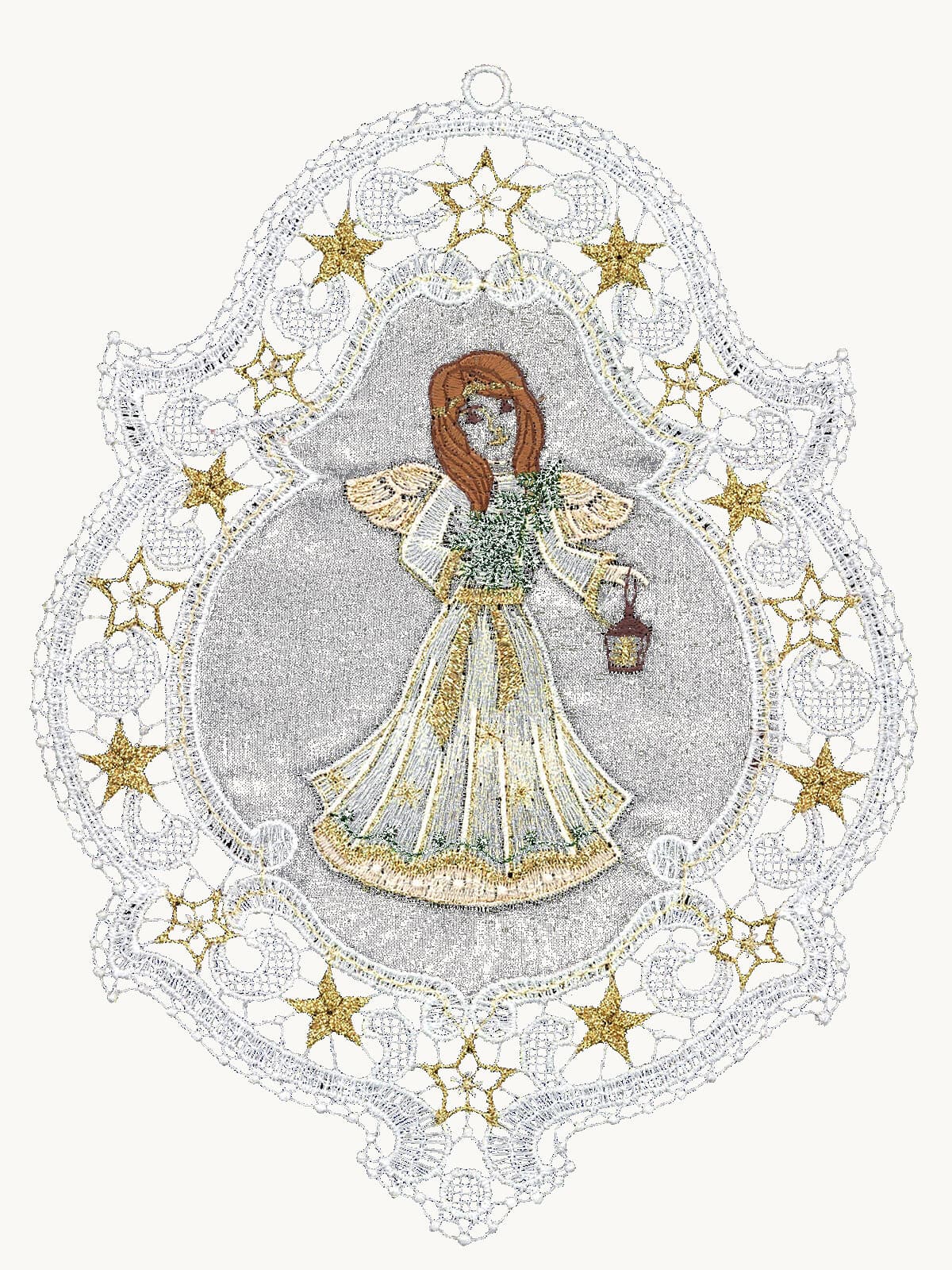
The Fensterbild, or window picture, is perhaps the most versatile form of Plauen lace for modern interiors. A single lace panel hung in a window transforms the light that enters a room, casting delicate shadows and creating a luminous image that changes throughout the day. The effect is architectural as much as decorative: the window itself becomes a designed element, a frame within a frame.
In minimalist interiors, where surfaces are clean and objects are few, a lace window picture becomes a natural focal point. The white-on-white transparency of the lace complements the restraint of the surrounding space without competing with it. A single panel in a bedroom window, an angel or a forest scene rendered in thread, can define the character of the room more effectively than any painting or print.
The key is to resist the impulse to overdecorate. One window picture, well chosen and well placed, is far more effective than several crowded together. Let the piece have space around it. Let the light do its work.
Table runners and the art of the centerpiece
The lace table runner is the most adaptable piece in the Plauen lace repertoire. A runner laid along the center of a dining table provides a visual axis that organizes the table setting without dominating it. On a bare wooden table, the contrast between the organic texture of the wood and the precision of the embroidery creates a dialogue between materials that enriches both.
In contemporary dining rooms, the runner works particularly well on tables with simple, clean lines. Oak, walnut, and ash surfaces all pair naturally with white or ecru lace. The pattern of the lace provides the only ornamentation the table needs, and the runner's narrow proportions ensure that it enhances the table's geometry rather than concealing it.
For everyday use, a shorter runner beneath a centerpiece arrangement, a simple vase, a cluster of candles, a bowl of seasonal fruit, provides structure and elevation without formality. The lace lifts the arrangement, literally and visually, giving it a sense of intention.
Christmas ornaments and seasonal display
The seasonal tradition of Plauen lace is perhaps its most familiar expression, and it remains one of the most compelling. Lace ornaments, bells, stars, moons, angels, and trees, hung from a Christmas tree or displayed in a window, bring a quality of light and delicacy that no other material can replicate.
The approach that works best in modern homes is curation rather than abundance. A tree decorated entirely in Plauen lace ornaments, each one catching the light from candles or small bulbs, has a coherence and elegance that a mixed collection of ornaments struggles to achieve. The uniformity of material, all white thread, all light and shadow, creates a cumulative effect that is greater than any single piece.
For those who prefer a more restrained approach, a small collection of lace ornaments displayed on a windowsill, a mantlepiece, or a simple wooden stand can anchor the seasonal decorating of a room without overwhelming it. Paired with natural elements, evergreen branches, dried oranges, beeswax candles, the lace ornaments connect the domestic interior to the broader traditions of the German Advent season.
Framed pieces and wall display
While window pictures are designed to be seen against light, framed pieces of Plauen lace can be displayed on walls with striking effect. A piece of lace mounted on a neutral linen or cotton backing and placed in a simple frame becomes a textile artwork, its intricate structure visible in a way that a window display does not always allow.
This approach is particularly effective for detailed pieces, nativity scenes, landscape compositions, figurative designs, where the viewer benefits from close inspection. Mounted and framed, the lace reveals its construction: the individual stitches, the color transitions, the areas where the designer's hand is most evident.
The frame should be subordinate to the lace. A thin wooden frame in a natural finish, or a simple white or off-white mat, allows the lace to occupy the full visual field. Heavy frames, gilded edges, and ornate moldings compete with the delicacy of the embroidery and should be avoided.
The principle of restraint
The common thread in all these applications is restraint. Plauen lace is a material of considerable visual complexity, and it does not need assistance. It does not need to be paired with other decorative textiles, layered with contrasting patterns, or supplemented with additional ornamentation. It needs space, light, and the confidence to let it be seen for what it is.
In this sense, Plauen lace is naturally suited to the aesthetic of contemporary interiors, where the principle of less is more has long been established. The material's own qualities, its transparency, its precision, its interplay of positive and negative space, align with the values of considered, intentional design. It asks only to be placed thoughtfully, and it rewards that thoughtfulness generously.
Continue reading
March 20, 2026·7 min read
The Plauener Spitze tradition
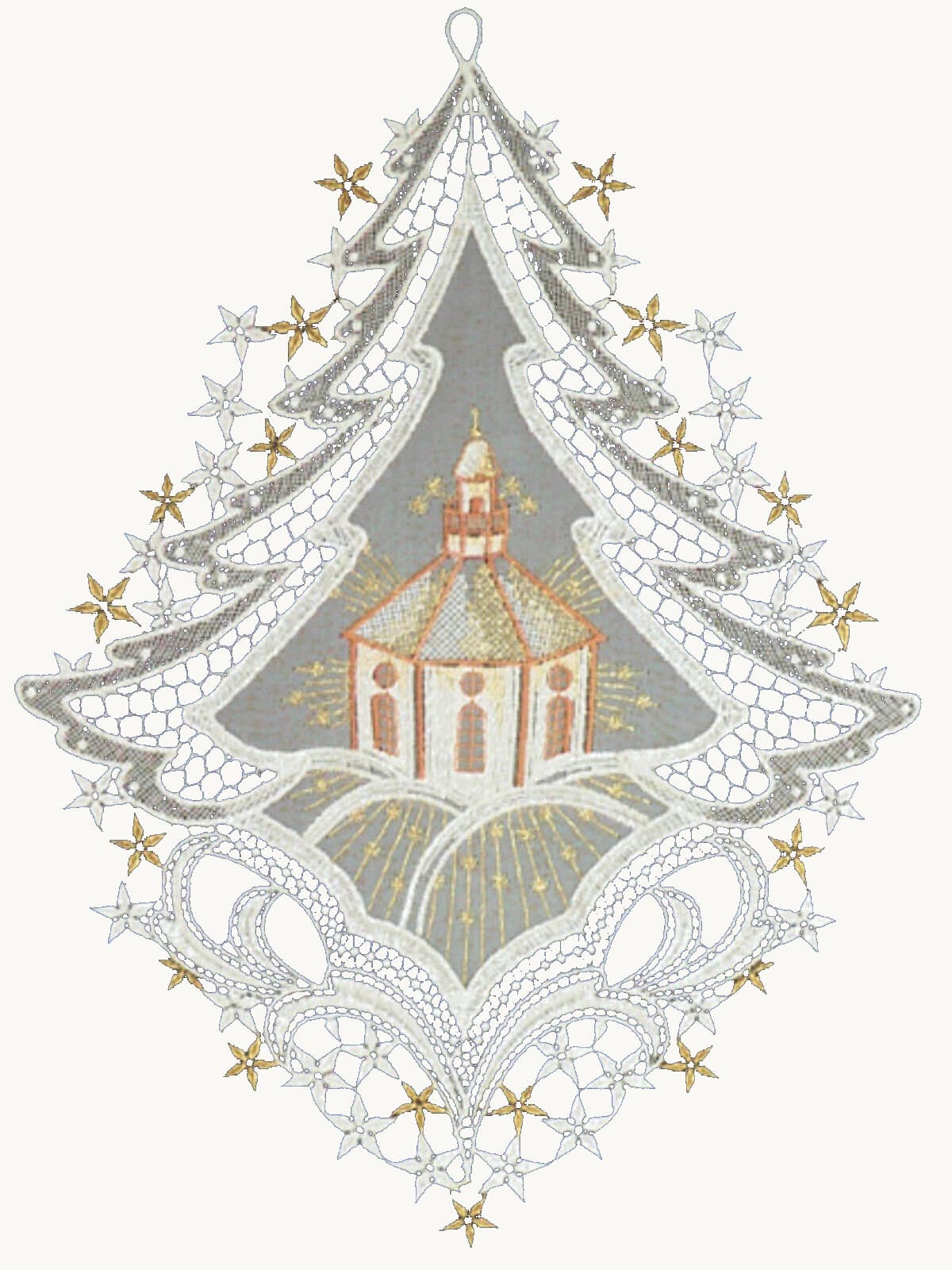
Five centuries of lace-making in Saxony's Vogtland region, from the earliest hand-worked threads to the refined embroidery that defines Plauen lace today.
March 6, 2026·7 min read
How Plauen lace is made
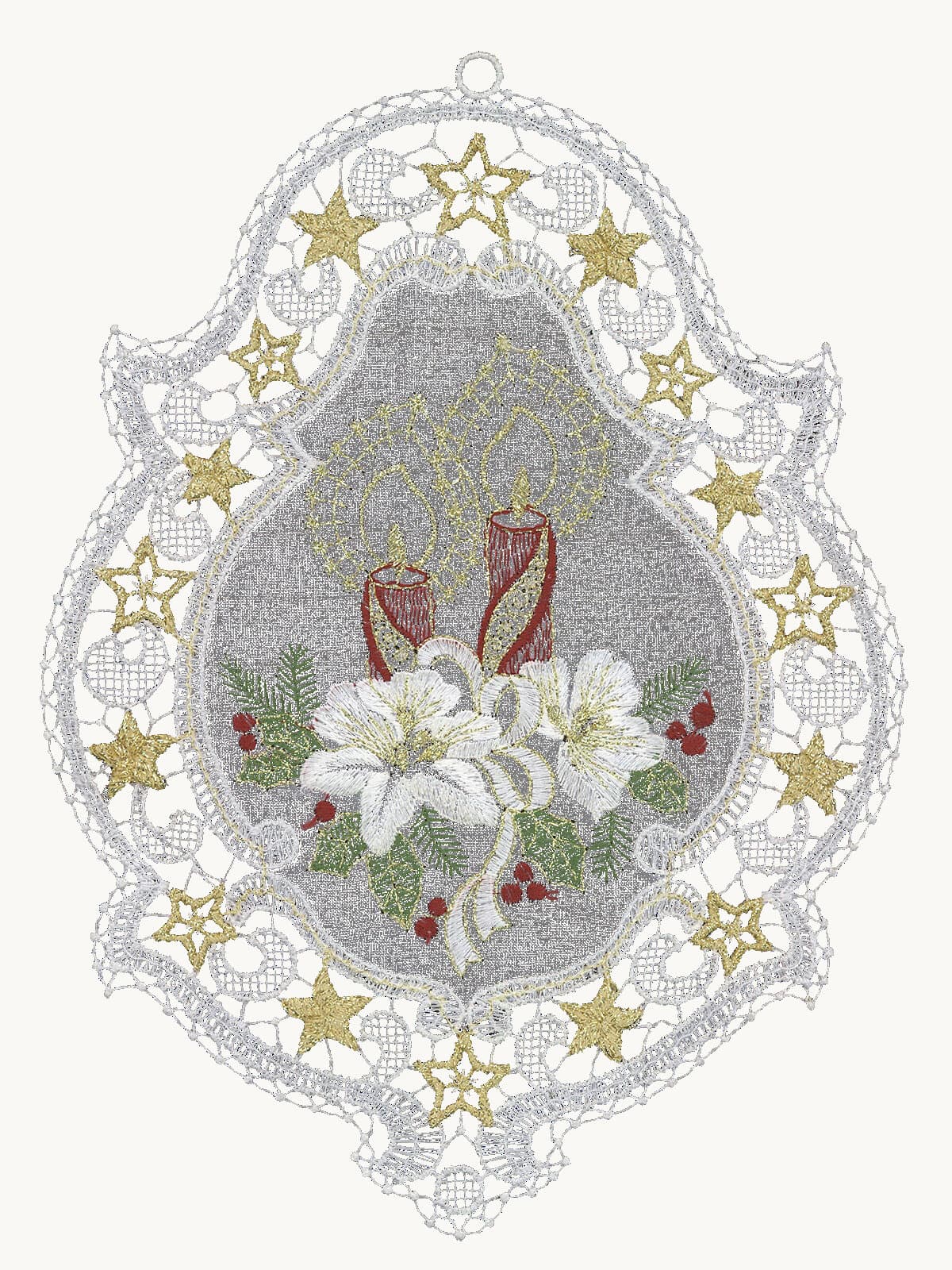
From the initial design drawing to the Schiffchen shuttle loom and the chemical dissolving bath, the process behind every piece of Plauener Spitze.