February 15, 2026·5 min read
The Vogtland: a region shaped by thread
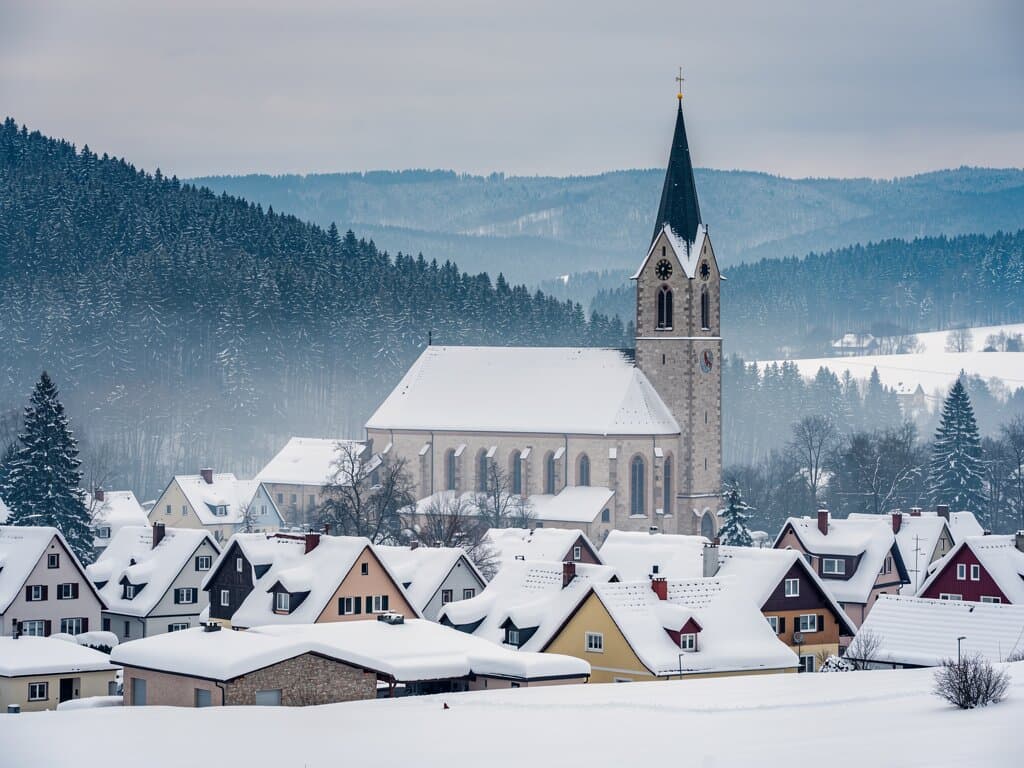
The Vogtland sits at the southeastern edge of Germany, where the borders of Saxony, Thuringia, Bavaria, and the Czech Republic converge. It is a landscape of rolling hills, dense forests, and small towns whose economies have been shaped by textile production for the better part of two centuries.
The region takes its name from the medieval Vogt, an imperial steward who governed the area on behalf of the Holy Roman Emperor. Long before lace-making arrived, the Vogtland was known for its musical instrument manufacture — the nearby town of Markneukirchen remains one of the world’s centers for handcrafted orchestral instruments. The common thread, if one may use the expression, is precision handwork: a regional temperament that favors patience, exactness, and an almost meditative attention to detail.
Plauen and its textile heritage
The city of Plauen, the Vogtland’s largest settlement, became the epicenter of the region’s embroidery industry in the second half of the nineteenth century. Cotton weaving had been practiced in the area since the 1700s, but the introduction of specialized embroidery machines transformed Plauen from a regional textile center into an internationally recognized name in fine lace.
At the peak of the industry in the early 1900s, Plauen and its surrounding villages housed hundreds of embroidery workshops. The sound of embroidery machines was as characteristic of the town as church bells. Workers walked between workshops and finishing rooms along streets named for the trade: Spitzenstraße, Stickereiweg.
The landscape in the lace
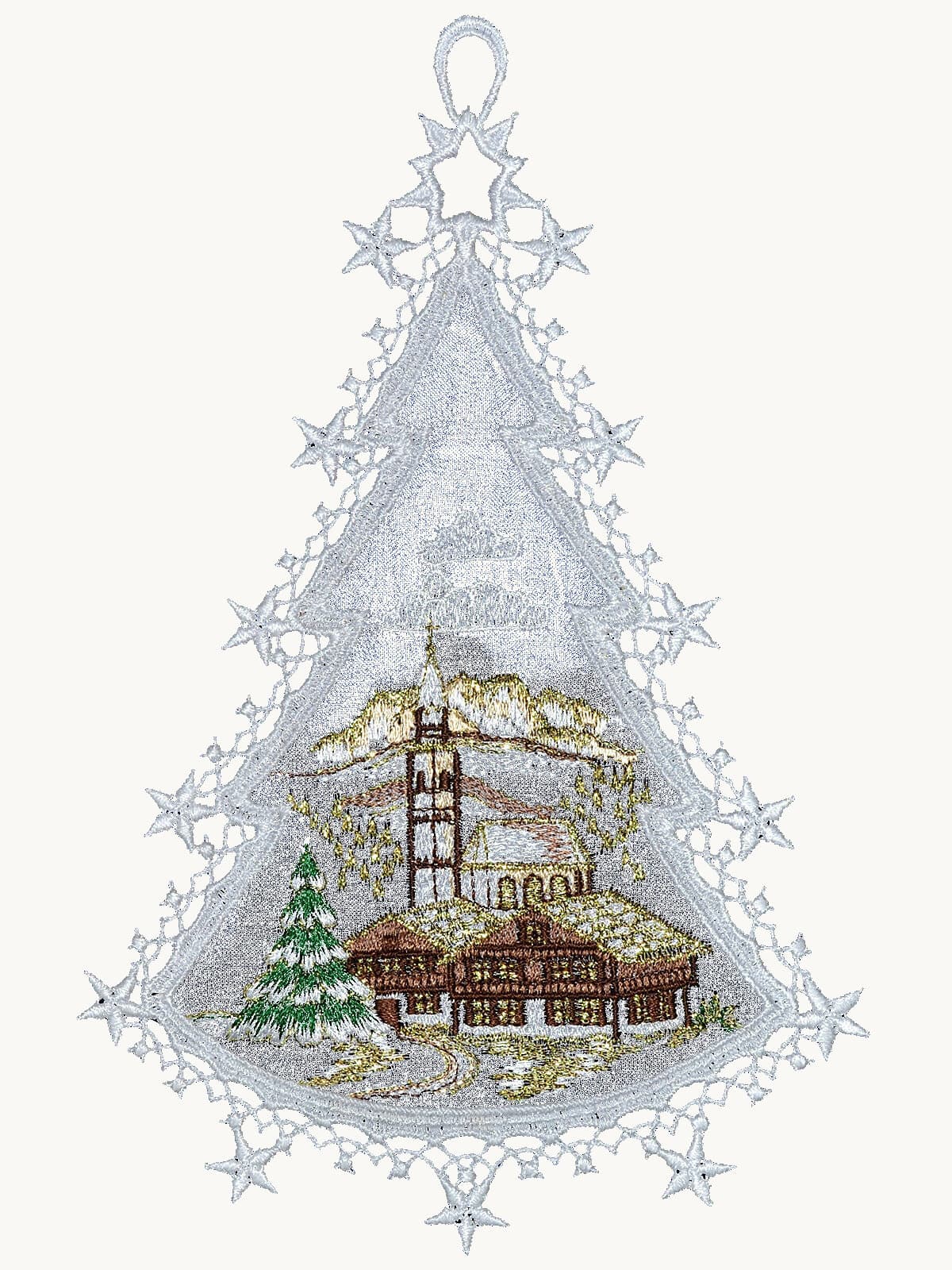
The motifs of Plauener Spitze are inseparable from the Vogtland’s landscape and traditions. Church steeples rising above snow-covered villages. Forests of pine and spruce. Deer at the edge of a clearing. Christmas markets with their wooden stalls and candlelight. These are not generic decorative themes — they are the scenes that the lace-makers see from their workshop windows.
Seasonal motifs dominate the tradition: Advent wreaths, nativity scenes, Christmas trees, angels, and stars appear across the range of Plauen lace products. This is not merely commercial calculation. The Vogtland’s cultural calendar revolves around the Advent season, and the region’s craft traditions — from Schwibbögen to Räuchermänner to Plauener Spitze — are all expressions of the same deep-rooted relationship with winter, light, and the turning of the year.
We do not choose these motifs. They are what we know. The church on the hill, the forest, the candlelight in the window. This is what the Vogtland looks like in December.
A tradition that persists
Today, the number of active lace workshops in the Vogtland is a fraction of what it once was. The region has experienced the same economic pressures as many traditional craft centers: competition from mass production, demographic change, and the difficulty of attracting young workers to trades that require years of training before proficiency.
Yet the workshops that remain are sustained by something more durable than market demand. There is a civic pride in Plauener Spitze that runs deep in the region. The Plauen Lace Museum, housed in a former factory building, draws visitors from across Germany. The annual Plauen Lace Festival celebrates the craft with exhibitions, demonstrations, and awards. And in the small workshops of the Vogtland, the embroidery machines still run, tended by hands that learned their skill from the generation before.