February 1, 2026·5 min read
Window pictures and the tradition of light
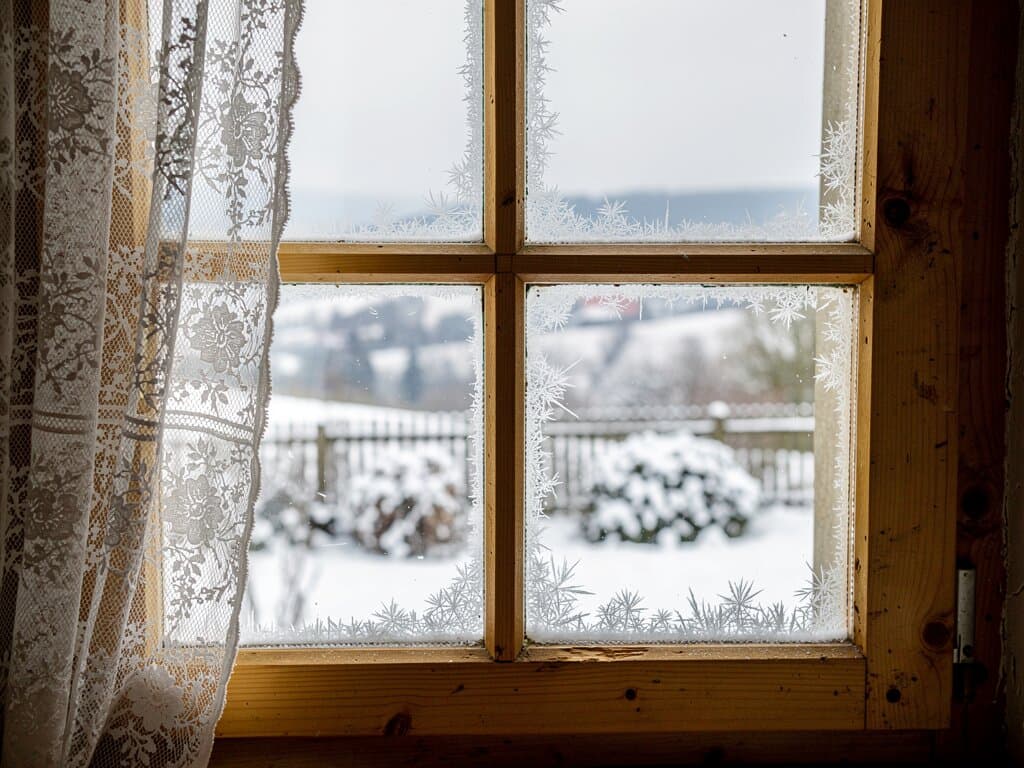
In the homes of the Vogtland, and increasingly in homes across Europe, there is a tradition of hanging lace in windows during the winter months. These are not curtains. They are Fensterbilder — window pictures — freestanding panels of embroidered lace designed to be seen against daylight.
The effect is distinctive and impossible to reproduce in any other medium. Light passes through the open areas of the lace, while the embroidered threads cast fine shadows and create a luminous silhouette. The image appears to float in the window, changing character throughout the day as the angle and intensity of light shift.
Origins of the Fensterbild
The tradition of decorating windows with lace or paper cutouts has roots that predate Plauener Spitze by centuries. In many parts of central Europe, particularly in Saxony and the Erzgebirge, windows were understood as thresholds between the domestic interior and the world outside. Decorating them was an act of communication — signaling the season, the household’s traditions, or simply an appreciation for beauty visible to passersby.
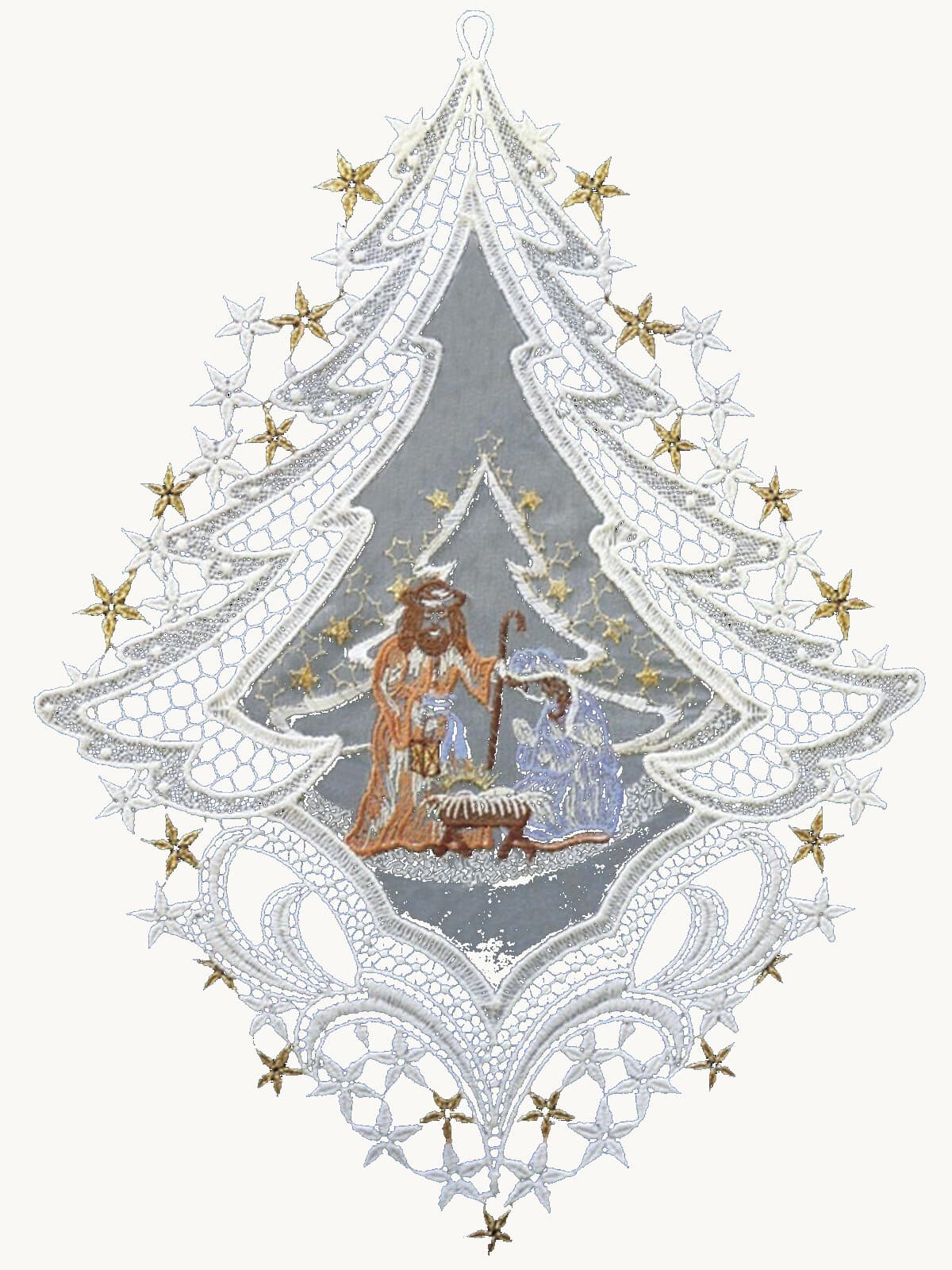
When the lace-makers of Plauen began producing window pictures in the late nineteenth century, they inherited this tradition and elevated it. The precision of machine embroidery, combined with careful hand-finishing, allowed for a level of detail that paper cutouts could not achieve. Scenes of remarkable complexity — nativity tableaux, forest landscapes, angel figures with outstretched wings — could be rendered in thread and displayed in a single pane of glass.
The role of light
What sets the Fensterbild apart from other decorative lace forms is its relationship with light. A tablecloth is seen from above, lit by room light. A wall hanging is viewed against an opaque surface. But a window picture is designed to be backlit, and this changes everything.
The lace-maker must think in terms of transparency and opacity. Densely embroidered areas will read as dark against the light; open areas will glow. The interplay between these zones creates the image. A skilled designer can suggest depth, atmosphere, and even time of day through the careful modulation of stitch density alone.
This is why window pictures are often most striking in winter, when daylight hours are short and the contrast between the warm interior and the cold light outside is greatest. A lace angel in a darkened window, backlit by pale December sky, has a quality that no electric light can replicate.
The lace does not create the image. The light creates the image. The lace merely shapes the light.
Displaying a window picture
Most Plauen lace window pictures are designed to hang from a small suction cup or hook attached to the window glass. The lace is starched firmly enough to maintain its shape without a frame, allowing it to hang flat against the pane. Some pieces include a fine loop at the top for hanging; others are designed to stand on a windowsill with a small support.
The choice of window matters. A north-facing window provides consistent, even light throughout the day. A south-facing window offers stronger contrast but may cause the lace to appear washed out in direct sunlight. Many collectors prefer east-facing windows, where the morning light illuminates the piece gently before the sun moves overhead.
Whatever the orientation, the effect is the same: a quiet transformation of ordinary daylight into something considered, composed, and beautiful. The Fensterbild asks nothing of the viewer except a moment of attention — and rewards it generously.